The Queen Mother was tickled pink: Editing the Groat, 1985-1988
Recorded 2 years ago

 About this recording
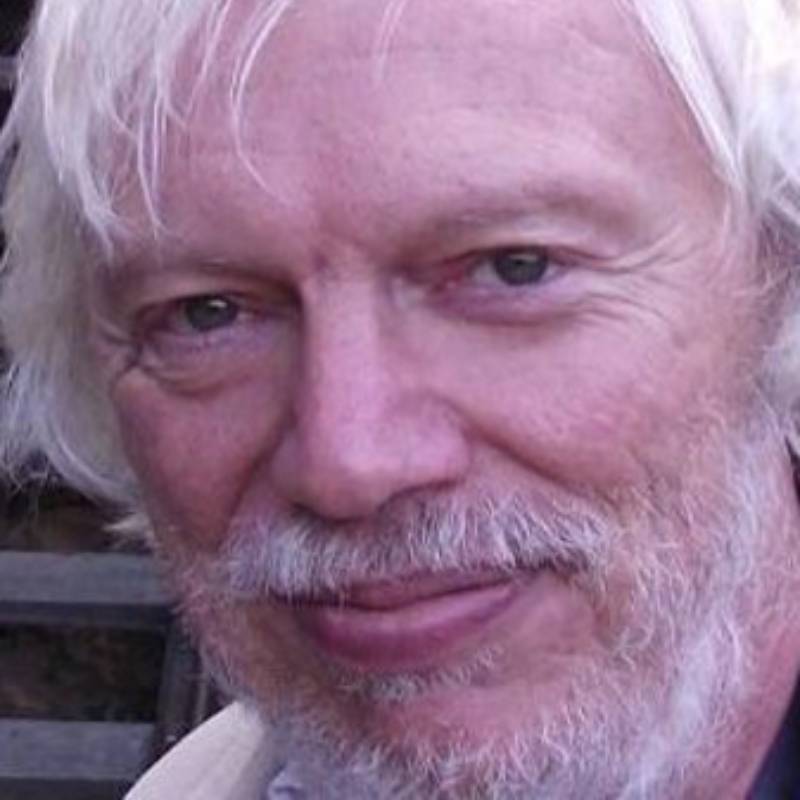
In this recording, Jeremy Hodges looks back on time as editor of the John O’Groat Journal and Caithness Courier from 1985 to 1988.
Originally from Essex, Jeremy came up from Worcester to replace previous editor Bette McArdle when she moved to a promoted role in Inverness. He recalls wondering whether it was a wise decision when he and his wife Christine, who is from Grangemouth, drove into the county for the first time. “We blew into Caithness quite literally one dark night in November and as we came across the Ord it began to snow,” Jeremy says. “And in the darkness, and with the windscreen wipers battling with the blizzard, I wondered what we had let ourselves in for.”
But he found Wick to be “a town of great character with a rich cultural heritage”, adding: “More to the point, the people were very friendly.”
The Groat and Courier, which had been operating as a bi-weekly since the 1970s, were “a circulation manager’s dream”. However, the working methods were decidedly antiquated as the papers were still produced using the old hot-metal process. They were still printed on site in Union Street at that time.
“Headlines could be tricky because the machinery that we had was ancient and bits were missing,” Jeremy explains. “I remember a printer coming down and saying could I possibly write a headline that only had one ’s’ in it, or otherwise could I accept it in a different font, because they didn’t have enough letters in that particular size of headline. So it was a bit of a jigsaw puzzle just sticking each edition together.”
As well as the Wick editorial staff, the papers had a Thurso-based reporter. His stories would be sent across to Wick by bus.
Jeremy presided over the transition to what was then called “new technology” and introduced his own page-plan designs to make the papers look more modern. He tells of the “creative tension” that sometimes arose between different departments.
A regular hot topic for the local press was Dounreay (“its very name sounded a bit like Doomsday”) and the papers had to be as balanced as possible in their coverage of nuclear stories. “The one thing I did discover about the nuclear industry is that if you weren’t careful it could become a typographical error,’ Jeremy adds. “To my shame, I once allowed a front-page news story to go through referring to the ‘unclear’ industry.”
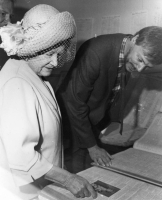
In 1986 the Groat celebrated its 150th anniversary, having been founded by Peter Reid in 1836. Jeremy describes how plans were made for the Queen Mother to visit the Groat office and meet the staff to mark the occasion during her summer stay based at the Castle of Mey. Her Majesty was “absolutely tickled pink” by a special front page created in her honour.
Jeremy points out that the Queen Mother always had two newspapers sent to her: The Times and the Groat.
He also reflects on the “hellish headline scandal”. An ill-advised headline above an otherwise unremarkable story about church fire safety concerns, arising from a meeting of Caithness Church of Scotland Presbytery, created a controversy that was picked up by newspapers in Fleet Street and far beyond amid accusations of blasphemy and a claim by the Wick procurator fiscal that it constituted a breach of the peace. The Daily Telegraph even published a front-page cartoon showing the Devil reading the Groat.
Jeremy says: “In some ways this was amusing and entertaining but really this was the kind of infamy that I wasn't looking for.”
 Contributors

 Photos