Wick Voices Home Recordings Collections About us News Contact us Log in

About us

We all have stories to tell. Our recollections enrich the lives of those around us. They help the next generation to share our sense of belonging.

These stories are at the very heart of the pride we feel in our community. If they go untold, they are lost forever.

·      Stories about the town, village or farm where we grew up.

·      Stories about our schooldays and our childhood escapades.

·      Stories about the places we’ve worked, the jobs we’ve done, and how we’ve spent our leisure hours.

·      Stories about our friends and families and the characters we’ve known.

Since 2016 The Wick Society’s Oral History Section has embarked on an ambitious, long-term project – Wick Voices – to ensure that as many stories as possible are preserved for posterity.

Wick Voices volunteers record the reminiscences of local people, not just from Wick itself but from across the east of Caithness. We carry out interviews in relaxed, informal settings with the aim of building up a professional-quality archive of digital audio recordings that can be accessed by all. This is social history in its most natural form – as told by the people who have lived it.

How often have we wished we could step back in time and rewind the reminiscences of our relatives?

·      “I wonder what life was really like for mum during the war years...”

·      “My dad was a shopkeeper. He could have told some great tales about all the local characters he knew...”

·      “I wish I’d asked my granny about growing up on the croft...”

·      “My grandfather was a fisherman in the last days of the herring industry – if only I’d got him to sit down one day and tell me all about it.”

Our reminiscences are unique and irreplaceable. Collectively they are a treasure trove of life experiences: nostalgic, educational, moving, entertaining and always interesting.

Wick Voices is a truly intergenerational project, as our volunteers work closely with local schools, care homes, daycare centres and community groups to record and share our experiences and our memories.

With the Wick Society at the hub of the project, we believe it will help to promote interest in our shared heritage.
The Wick Society

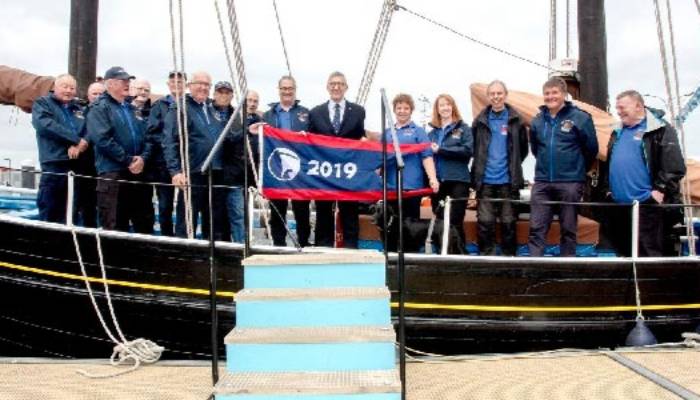
The Wick Society's drive to preserve and promote the heritage of Wick is delivered through its four collections - The Wick Heritage Museum, Wick Voices, The Johnston Collection and its Boat Section.

The society is based at the Wick Heritage Centre in Bank Row which is open to the public from April to October each year. Contact can be made at any time by email - museum@wickheritage.org 

The museum's first displays opened in 1981 and they have continued to expand in terms of subject and content as items were either loaned or gifted. Significant work is being done to ensure the items are catalogued and accessible to the public.

On the 4th February 2002 the Wick Society bought the land and buildings to the East of the Wick Heritage Centre to enable continuing development. On the 7 January 2004 the Wick Society became a Company Limited by Guarantee 

The Wick Society is committed to preserving and promoting Wick's proud heritage for the inspiration of future generations. In this respect Wick Heritage Museum has developed positive links with schools and other youth groups throughout Caithness. Wick Society acknowledges the financial and practical support it receives, and continues to receive, from local agencies and businesses.

You can visit the Wick Society website by clicking here.

The Johnston Collection

Another major ongoing project run by the Wick Society is The Johnston Collection digitsation project.

The Johnston Collection represents the work of three generations of Caithness photographers who captured images of life in and around the area between 1863 and 1975. During that period they produced around a hundred thousand glass plate negatives. Of these, around fifty thousand survive and are held in trust by the Wick Society.

The Johnstons captured an era when Wick was the herring capital of Europe. The silver darlings (as the herring were fondly known) used to attract over a thousand boats which crowded the harbour during August and September each year, and thousands of migrant workers would swell the town's population. They were photographed preparing the boats, setting sails, landing catches, and onshore in scenes of intense activity. Also photographed were teams of workers who gutted, cured, packed, and carted the salted herring for export across the world.

The collection represents a unique record of Wick's development and its importance as a major herring fishing port, as well as unique scenes from many other areas of industry and general life across Caithness and Sutherland.

You can visit the collection's website by clicking here.

All content and recordings are copyright 2026 The Wick Society

Brought to you by the online heritage experts