
My Mother treated everybody the same
Recorded 2 years ago

 About this recording
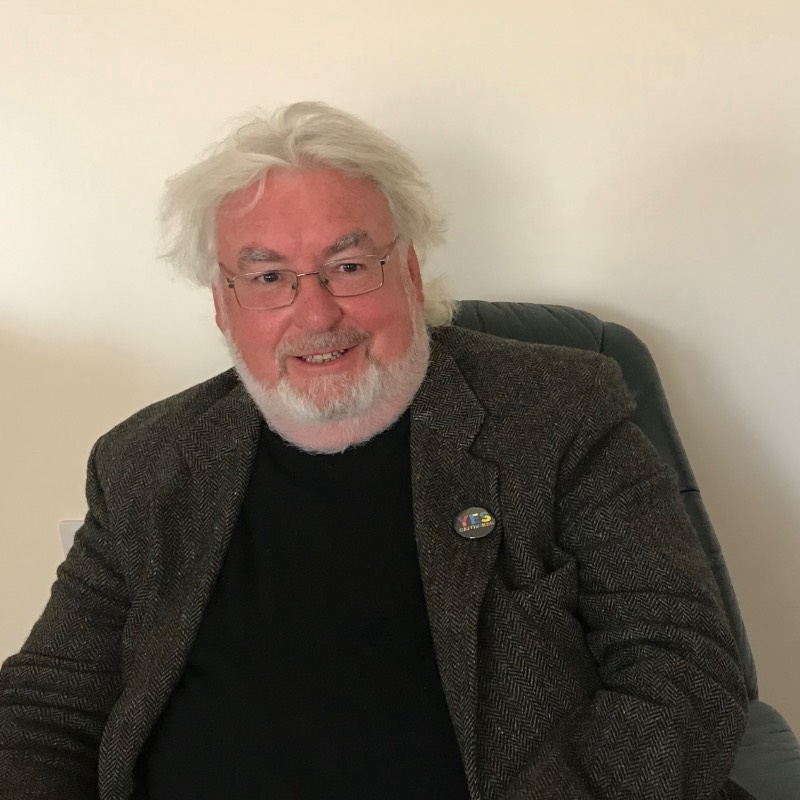
Caithness poet, playwright and novelist, George Gunn recalls the life of his mother and grandmother, growing up in Pulteneytown during the herring heydays.
Helen Isabella Miller More was born in 1922 in a single end in Union Street, Pulteneytown. Her mother, George’s nana, worked for Bruce the fish curer, as a herring gutter. George’s grandfather was a cooper, but sadly died in an accident in Wick Harbour before his daughter Helen was born.
As a herring gutter, his grandmother ‘followed the herring’ from Baltasound in Shetland, through Pulteneytown, Peterhead and finally to Lowestoft. The return of the gutters and their kists was always a great occasion. This was when the presents would also arrive.
George describes his Nana as a “peedie wee wifie” who gauged the value of a sermon by the number of pandrops she could sook.
His mother had three siblings, two brothers and a sister. Her brothers George and Leslie both went to Edinburgh University, with the support of a grant from the ‘Herring Board’. Leslie went on to be a research chemist, while George studied classics. Despite being able to go to university, at the end of the term there was no money for transport, so the boys had to walk to Wick from Edinburgh, getting food and shelter from kind strangers along the way. The belief was that education was the way out of poverty.
Poverty was what these Pulteneytown families knew, but when George’s mother had a spell training as a nurse in Rotten Row in Glasgow, she came to know poverty on a different level. The Pulteneytown families lived in cramped conditions, but it was nothing compared to city poverty.
George considers that his uncle George was a considerable influence on him and his writing. When George More became the English Master at George Watson’s College, Edinburgh, he would send home abridged versions of the works of Homer and the Orkneyinga Sagas. George’s mother would read the books to him and his brother. Consequently, both George and his brother could read and write before they went to school.
When George went to school he found ‘Dick and Dora’ less of a challenge, and he remembers his teacher sending him to the back of the class with the King James Bible to read. One day George was confused by what the word ‘begat’ meant. As George’s mother graduated as a midwife, George later discovered the meaning of ‘begat’.
George’s mother eventually became the District Nurse for Dunnet, travelling around the district in all weathers in her Ford Poplar car and later a Mini. She was known as the ‘blue angel’ and often came home with gifts of fish, partans and lobsters from grateful members of the community.
He recalls how his mother told the story of a great aunt giving birth to a non-white baby called Eppie More, which gave way to her phrase of “we are all the seeds of Eppie”.
George concludes with a moving poem written for his mother.
 Contributors
 Photos


